

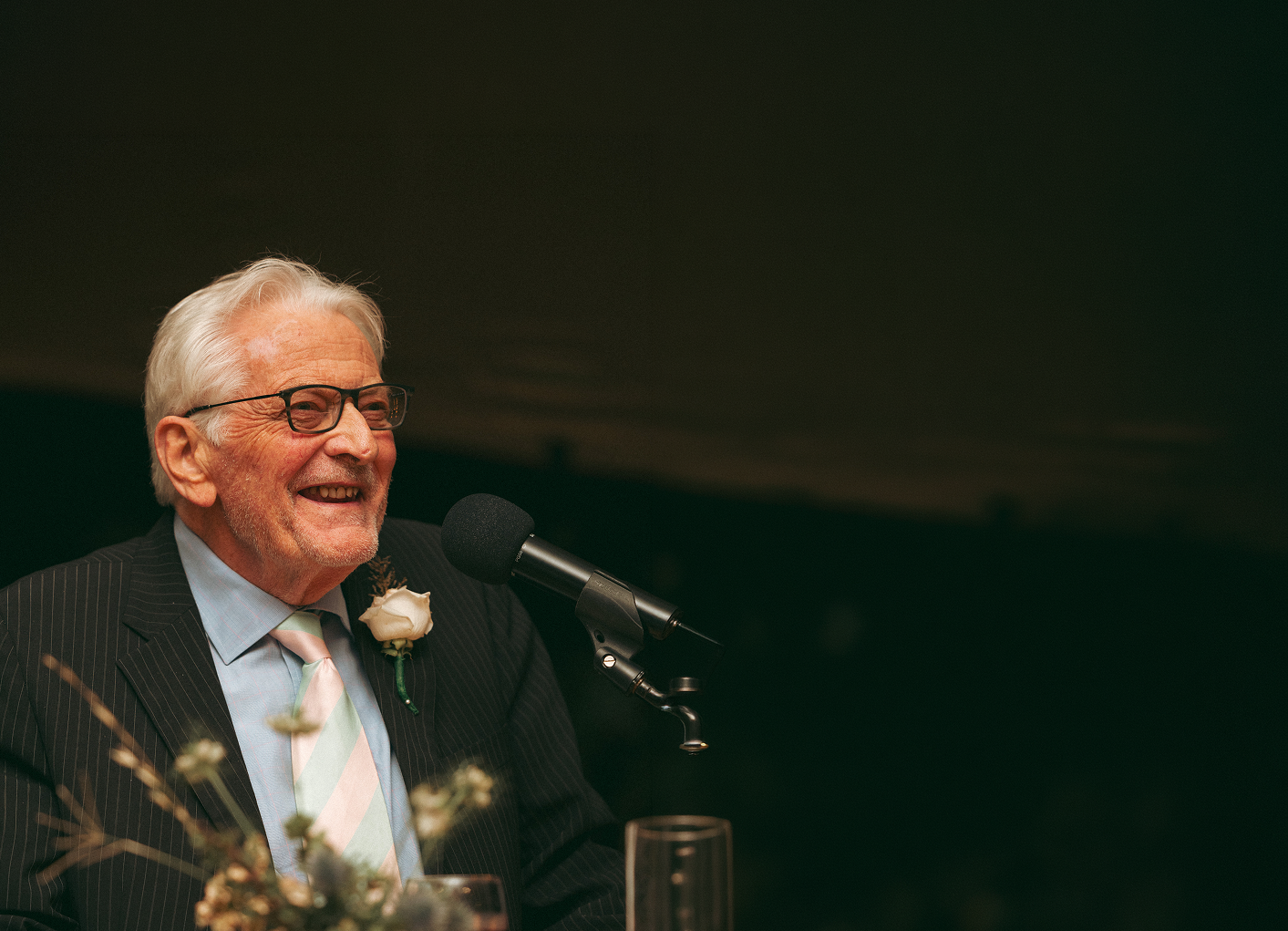
Samara has lost its founding father. Mark Tompkins, who co-founded Samara Karoo Reserve in 1997, has died after a remarkable life characterised by enterprise and vision. A man of conviction and a true original, Mark was not someone who did things by halves. He leaves behind a profound legacy.
Born and educated in England, Mark attended Bedford School and the University of Cambridge. At Cambridge, he was a member of the Footlights comedy society, rowed for Gonville and Caius College’s First Men’s VIII and graduated with a degree in Natural Sciences and Economics. After attending INSEAD Business School, Mark built a successful career as an investment banker and thereafter in healthcare and property. All things considered, his was the kind of trajectory that might have kept a lesser explorer firmly in boardrooms and on better-travelled roads.
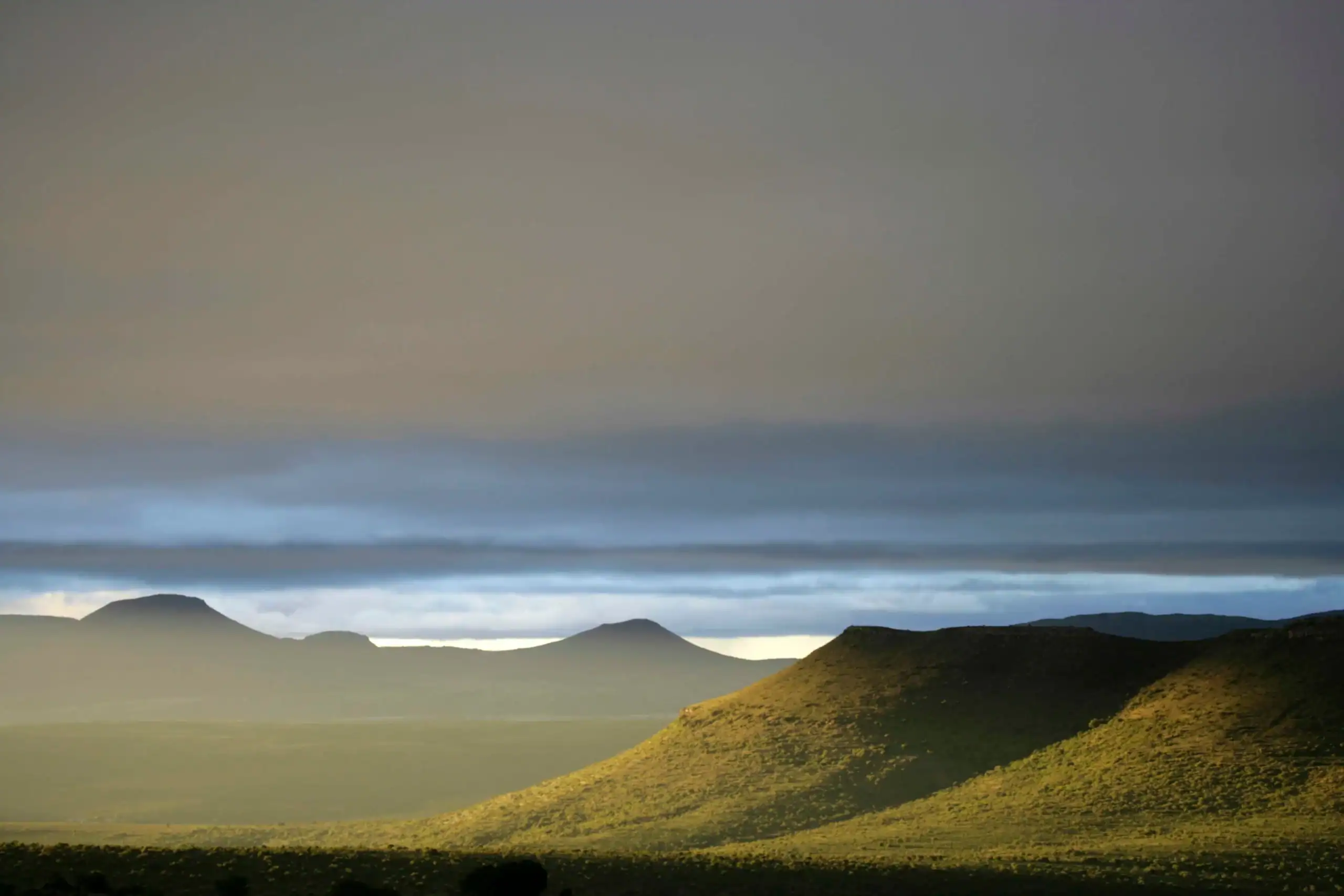
But Mark found in his wife a co-conspirator. South-Africa-born Sarah took him on his first trip to Africa, a holiday to Botswana’s Okavango Delta in the early 1990s, which set the scene for what was to come. Post-1994, Mark and Sarah turned their gaze towards South Africa and specifically a semi-arid region called the Great Karoo, hitherto unknown to the general public. Once home to thunderous springbok migrations rivalling those of the Serengeti in magnitude, the region had, through centuries of domestication, largely been denuded of its wildlife.
A single farm for sale in the heart of the Graaff-Reinet district announced itself as a beacon of possibility. As Mark said at the time, “We knew it was lunacy, but we just fell in love with the place.” The Tompkinses saw the potential for transformative impact in restoring a landscape that had lost its wildness.
SANParks scientists first showed Mark what that impact might look like. Flying with them in a small aircraft across the vast landscape, he traced the ecological corridors between Addo Elephant National Park and the Karoo. From those white-knuckle flights a vision crystallised. A landscape-scale restoration project to restore a piece of the Karoo to its wild state, providing a winning plan for the people and wildlife of the region.
Inspired by Sarah’s passion for the wild, Mark proceeded to do what few might conceive of, let alone attempt — assemble eleven farms across this little-known but uniquely biodiverse corner of South Africa, creating a 27,000-hectare conservation project of regional, national and international importance.
A stickler for the scientific method, Mark understood that ambition alone could not restore a degraded ecosystem. Seeking the counsel of Professor Graham Kerley and his colleagues at Nelson Mandela University, Mark ensured that Samara’s objectives were grounded in rigorous science, mapping a credible and defendable path back to wildness.
Mark also grasped something that pure conservation science often overlooks — that rewilding without an economic model is a dream with no engine. And so a world-class tourism business grew alongside the ecological restoration at Samara, creating livelihoods for local people and ensuring that the magic of the Karoo — and the broader ecological mission — would be shared with those further afield.
Today, Samara is an award-winning safari destination with three luxury lodges welcoming visitors from South Africa and around the world. In large part thanks to Mark’s foresight, Samara also stands as one of South Africa's notable conservation success stories. Almost thirty years after inception, the once-emptied landscape hums with wildlife — from lion and elephant to cheetah, Cape mountain zebra and blue crane — an ode to the Karoo’s biodiversity.
Although out of the spotlight at Samara in recent years as ill health took its toll, Mark remained a constant source of wisdom and counsel to those who knew him. A man of principle, deeply generous and with an irreverent sense of humour, Mark was also a beloved husband, father, grandfather and friend. He will be deeply missed.
Samara Karoo Reserve is a leading conservation journey to restore 67,000 acres of South Africa’s Great Karoo landscape and beyond through rewilding and responsible tourism. Staying at one of Samara’s lodges acts as a direct contribution to this vision.